The Volunteers Who Never Stopped Shipping: What Modders Know About Caring for a Game
Photo: Ramman74, CC0, via Wikimedia Commons
There's a particular kind of magic in booting up a game you've played for a decade and finding it better than you left it. Not a sequel. Not a remaster you paid sixty bucks for. Just... better. Smoother framerate, a restored quest line, a bug that's plagued you since launch finally squashed. And somewhere in the patch notes, instead of a studio logo, you'll find a handle like 'SilverJournal_' or 'FixitFred'—someone who did this for free, on nights and weekends, because they couldn't stand to see good craft left unfinished.
If you've spent any time in PC gaming, you already know this phenomenon. If you haven't, buckle up, because the modding scene might be the most underappreciated apprentice program in the entire industry.
The Unofficial Maintenance Department
Here's a pattern you'll recognize: a game launches, sells well, gets eighteen months of patches, and then the studio quietly rotates the team onto the next project. The servers stay up. The Discord stays open. But the actual work of stewardship—the patient, unglamorous labor of keeping a complex piece of software healthy—winds down.
Enter the modders.
The Skyrim modding community is the canonical example, more than a decade removed from release and still shipping fixes, overhauls, and quality-of-life improvements that Bethesda never got to. The Silent Hill 2 enhanced edition project rebuilt lighting, fog, and audio that the original PC port mangled. Classic WoW-era communities have rebuilt dead multiplayer games from scratch. These aren't vanity projects. They're often the difference between a game being playable on modern hardware and being a coaster.
And here's the kicker: these volunteer fixes routinely outperform the official patches that came before them. Modders have time. They have focus. And crucially, they have ownership—nobody assigned them this work, so nobody's cutting corners to hit a milestone.
I Talked to the People Doing the Work
I reached out to a few mod creators to understand what drives them, and the answers were refreshingly un-corporate.
"Nobody pays me, so I get to do it right," one longtime Bethesda modder told me, only half-joking. "If I break something, the community finds it in an hour and I fix it the same night. There's no QA pipeline, no ticket triage, no meeting about the meeting. Just the work."
Another creator, who spent two years restoring cut content from a well-known RPG, put it even more plainly: "The devs wanted this stuff in the game. I've read their design docs, their old forum posts. They ran out of time and money. I didn't have either constraint, so I finished their sentences."
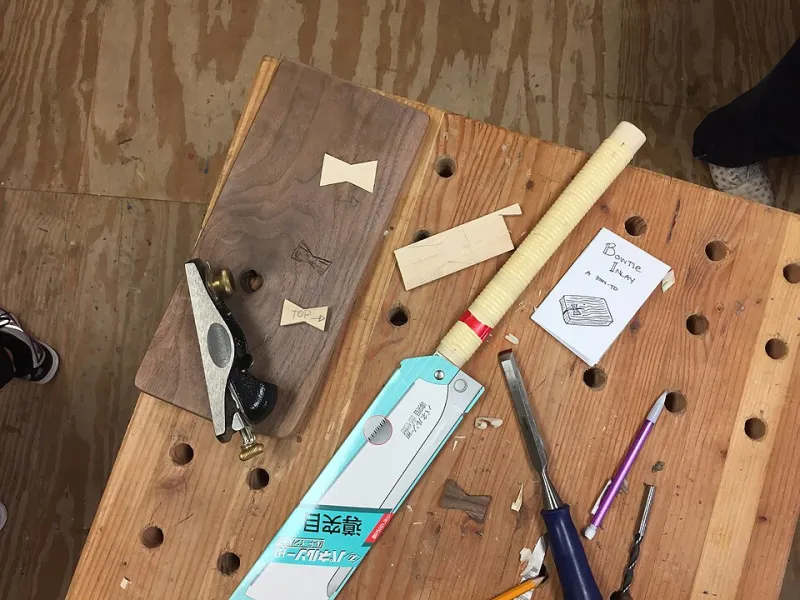
That last line stuck with me. Finished their sentences. That's not fandom, exactly. It's closer to what woodworkers call respecting the material—continuing someone else's joinery because you can see what they were trying to build.
The Maker Mentality, Formalized
At GamerKraft, we talk a lot about craft—the maker mindset that treats a game like a thing you tend, not a product you abandon. And modding communities are the purest expression of that mindset in gaming today.
Consider what modders do that studios often don't:
- They document everything. Mod pages read like lab notebooks: what changed, why, what broke, what the tradeoffs were.
- They version patiently. A mod might see a hundred small releases over years, each one a conversation with users.
- They fix root causes. No incentive to ship a workaround when you're not racing a fiscal quarter.
- They hand off gracefully. Good mod authors write handover docs so successors can pick up the torch.
Sound familiar? It should. This is basically the open-source software ethos, and it's why projects like Linux run the world. Games are software. The stewardship problem is the same. The difference is that studios treat post-launch maintenance as a cost center, while modders treat it as the point.
What Studios Should Steal
I'm not naive—studios have payroll, publishers, shareholders, and all the rest. Nobody's suggesting developers work for exposure. But the modding model offers a few genuinely transferable lessons:
Budget for the long tail. A small, permanent maintenance team costs less than a remaster, and it builds more goodwill. Look at how much press a studio gets for "we're still patching this game" versus a new trailer.
Open the doors. Official mod tools, public bug trackers, and accessible asset pipelines let the community do the work studios can't staff. Half the reason Skyrim aged so well is that Bethesda made it possible for fans to care for it.
Hire from the community. Every major mod project is a portfolio of proven, self-directed work. Studios that recruit from modding scenes get people who already understand shipping, feedback loops, and player empathy.
Say thank you. It costs nothing. When a modder spends two years fixing your game, a public acknowledgment—and ideally a CDK key and a job interview—costs the studio almost nothing and means everything.
The Craft Argument
There's a temptation to frame modding as fans fixing studios' mistakes, but that undersells both sides. The truth is more interesting: modding is what happens when a game becomes a shared object—something a community feels jointly responsible for, the way neighbors might restore an old house.
The studios that understand this are the ones whose games people still talk about in twenty years. The ones that don't will keep shipping beautifully polished launches and quietly abandoned legacies.
Craft isn't something you do at launch. It's something you keep doing. The volunteers figured that out a long time ago. Maybe it's time the industry took notes.