One Good Mechanic Beats a Dozen Mediocre Ones: The Case for Small, Polished Game Design
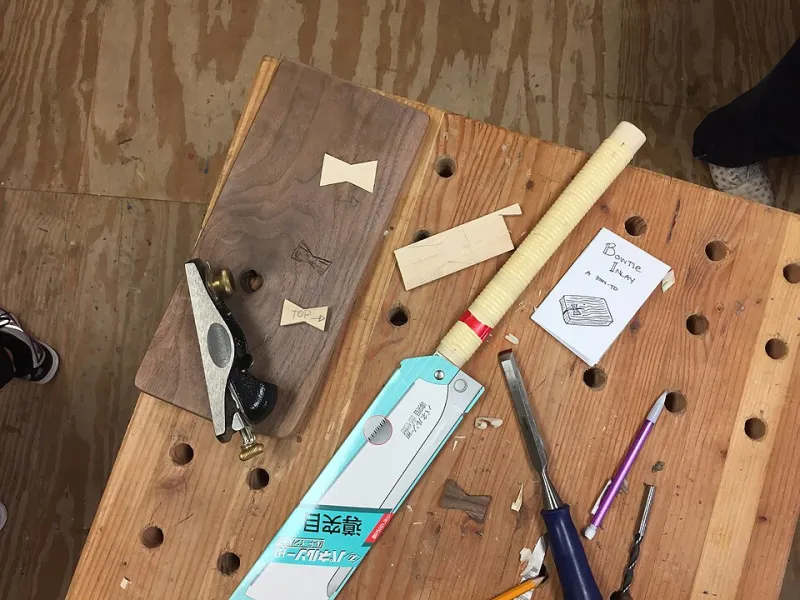
Photo: Terasaface, CC BY-SA 4.0, via Wikimedia Commons
There's a certain smell to an over-scoped game. You know the one — the Steam page promising base building, crafting, romance, roguelike runs, and a fishing minigame, all rendered in an early access build that barely holds together. Meanwhile, a two-person team in a garage just shipped a game about stacking blocks, or rewinding time, or throwing a single frisbee, and players can't stop talking about it.
Here at GamerKraft, we spend a lot of time in indie dev Discord servers and convention demo booths, and we keep circling the same conclusion: the games that endure are built the way a woodworker builds a chair. One idea, sanded until it shines.
The Feature List Is Not the Game
Modern marketing has trained us to evaluate games like spec sheets. More systems, more hours, more content. But ask yourself: when was the last time you fell in love with a game because of its feature list? Odds are, you fell in love with how something felt.
Celeste is, mechanically, a jump. That's it. But Team Cherry—sorry, Maddy Makes Games—polished that jump with a level of care that turns a single input into an instrument. The coyote time, the dash cancel, the forgiving hitbox. Every pixel serves the one idea.
Contrast that with big-budget titles that launch with 40 systems and a day-one patch roadmap. Scale isn't craft. Sometimes it's the opposite — a way to hide the fact that nothing got finished.
What Craftsmanship Actually Looks Like
Craft in game design isn't polish in the AAA sense — motion-captured cutscenes and ray tracing. It's closer to what a woodworker calls joinery: the invisible work where pieces meet. Some tells:
- The core loop is fun in the first ten minutes. Not after the tutorial, not after the skill tree unlocks. Immediately.
- Feedback is everywhere. Sound, animation, screen shake, controller rumble — the game responds to you like a well-tuned instrument.
- Depth emerges from simplicity. Think Slay the Spire, where a deck of cards becomes an engine of a thousand decisions.
- Nothing feels bolted on. If a mechanic exists, it talks to the others.
AAA games get this right too, to be fair. Portal came out of a small student project built entirely around one mechanic — momentum-preserving portals — and Valve had the wisdom to let it stay small. Outer Wilds is essentially a knowledge-based exploration loop, and it's one of the most profound experiences of the last decade. The lesson crosses budget lines: restraint is a feature.
Why Small Teams Are Built for This
There's a practical reason indie studios tend to win at this. A five-person team physically cannot build forty systems. They have to choose, and choosing forces clarity. When your runway is twelve months and your savings are on the line, you find out fast which mechanic is actually carrying the game.
We've talked to dozens of developers for our Indie Spotlight series, and the pattern is remarkably consistent. The teams that ship something special are almost always the ones who cut the most. "We had a whole combat system at one point," is a sentence we've heard more times than we can count — usually followed by, "then we deleted it, and the game got good."
That's not limitation breeding creativity as a platitude. It's a workflow. Constraint is the sandpaper.
How to Shop Like a Craftsperson
So what does this mean for you, the player staring at a wishlist 200 items deep? A few things we've started doing before buying:
- Watch the first ten minutes of gameplay, not the trailer. Trailers sell the fantasy; gameplay footage shows the joinery.
- Ask what the one mechanic is. If you can't name it, the studio might not be able to either.
- Check how long the studio has been iterating. A demo that's been through five Steam Next Fests usually signals a team that sands rather than ships.
- Read reviews that talk about feel, not content. "I couldn't stop playing" beats "there are 80 hours of content" every time.
The Bottom Line
Games are the only art form where the audience performs the work alongside the creator, and the best ones are built like good tools — balanced in the hand, nothing wasted, made to be used again and again. The next time a store page screams about scale, take a breath and look for the one small idea done exceptionally well.
That's where the memorable games live. They always have been.