Cast Iron and Save Files: What a Decade of Replays Taught Me About Well-Made Games

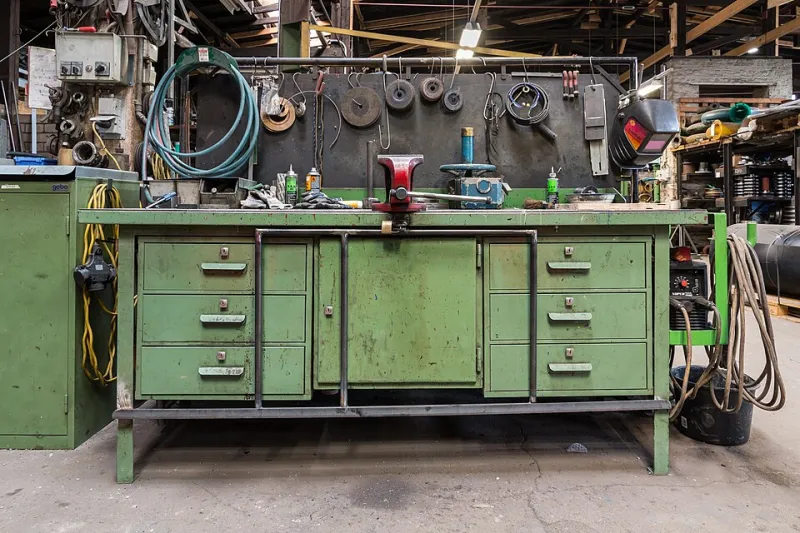
Photo: Chesham United Fan , CC BY-SA 2.0, via Wikimedia Commons
My grandmother's cast-iron skillet has outlived three non-stick pans, a marriage, and two kitchen renovations. Nobody ever unboxed it with a hype trailer. It earned its place on the stove through repetition — thousands of mornings of cornbread and fried eggs until the seasoning got so good you could wipe it clean with a paper towel.
Games work the same way, and the industry mostly pretends they don't. We review games at launch, we rank them in year-end lists, we argue about them for a news cycle. Then the discourse moves on, and the only real test — the fifty-hour test, the five-hundred-hour test, the my-kid-is-now-old-enough-to-play-it test — happens in silence, in basements and on couches, years after the review embargo lifted.
So I did something a little unscientific and a little nerdy: I went looking for the games people are still playing a decade or more in, and I asked them why. Not the games with the best launch metascore. The ones still in rotation. The answers were remarkably consistent, and they read like a craftsperson's materials list.
Readability Beats Spectacle Every Time
The first thing that came up, again and again, was legibility. The people still playing Spelunky, FTL: Faster Than Light, and RimWorld into their second decade all said versions of the same thing: they can read the screen at a glance, even tired, even distracted, even years after their last session.
"I can tell what killed me in half a second," a Spelunky regular told me. "That's the whole game. The screen never lies to me."
Compare that to plenty of modern releases where the HUD is a crime scene of icons, damage numbers, minimaps, and quest markers all screaming at once. Flashy graphics age. Clarity doesn't. A game you can parse instantly at hour four hundred is a tool that still fits your hand.
Feel Is the Seasoning You Can't Fake
The second ingredient is harder to articulate, but everyone tried anyway: feel. Movement in Celeste (younger, yes, but destined for this list), the gunplay in Halo 3, the chunky physics of Team Fortress 2. Communities described it as muscle memory that never rots — input goes in, satisfying thing comes out, no tax in between.
One TF2 veteran put it best: "I've played shooters with better graphics every year since, and none of them feel like catching a baseball. That one does."
This is the part of game craft that most resembles cooking. You can't shortcut it with better ingredients. It's heat, time, and a developer who cared about the half-seconds nobody was supposed to notice.
Forgiving Interfaces, Unforgiving Games
Here's the counterintuitive one: the most demanding games on the list are the gentlest to operate. Dwarf Fortress, notorious for its depth, lets you lose a fortress and laugh about it. RimWorld turns catastrophe into a story you tell your friends. FTL kills you in twenty minutes and hands you a fresh ship.
The games that endure don't punish you for using them. They make failure cheap, fast, and interesting, so returning never feels like homework. Meanwhile, plenty of big-budget releases make you pay a toll just to get back in the door — long unskippable intros, re-tutorializing, login queues. That's a skillet that needs hand-washing only, and nobody reaches for it on a Tuesday.
The Community Is the Care Instruction
Every durable game on my informal list had one more thing in common: people tending it. Modders, wiki editors, tournament organizers, Discord servers where someone will explain the meta to a newcomer at 2 a.m. These are the folks who re-season the pan, so to speak — and notably, most of them are volunteers, not the original studio.
That tells you something about what craft actually means in games. It's not just the object. It's the ecosystem of care that forms around an object worth keeping. Studios that build for that — releasing tools, documentation, and stable builds — are planting orchards, not flipping inventory.
Buy Like You're Furnishing a Kitchen
So here's my proposal, GamerKraft readers: judge games like you'd judge cookware. Ignore the launch-week shine. Ask whether you'll still want to reach for it when it's not new. A game that's readable, that feels right in the hands, that forgives your return, and that a community loves enough to maintain — that's a purchase, not a rental.
The sourdough starters of gaming are lovely too. They're just not what you'll be cooking with in ten years. My grandmother's skillet taught me that the best things in the kitchen are the ones that get better the more you use them. Turns out the same rule runs the whole medium.