Built to Be Taken Apart: How 2026's Games Learned to Trust Us With the Tools
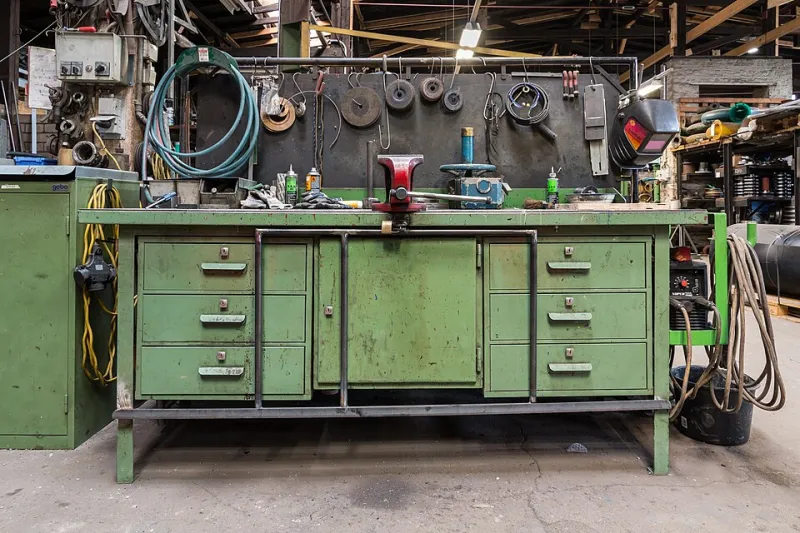
Photo: Dietmar Rabich, CC BY-SA 4.0, via Wikimedia Commons
There's a moment in almost every workshop I've ever visited — a woodshop, a bike co-op, my uncle's garage in Ohio — where the master of the space hands you the good tool. Not the beginner version. The real one. It's a small gesture, but it says something: I trust you with this.
That's the feeling more and more game studios are chasing in 2026, and honestly? It might be the healthiest trend in the industry.
The Year Players Got the Toolbox
Think about what shipped this year. Photo modes so deep they border on full editing suites. Difficulty settings that don't just toggle enemy health but reshape encounters entirely. Replay editors that let you recut your own highlights. And — the big one — official mod toolkits landing on day one instead of three years later, after a community already reverse-engineered the whole thing.
This isn't a coincidence. Studios have started treating their games less like finished products and more like living workshops. The game ships. Then the players get their hands on it, and — here's the radical part — that's considered a good thing.
For decades, the prevailing attitude was the opposite. Games shipped locked down. Difficulty was a moral statement. Modding was tolerated at best, litigated at worst. If something was broken, you waited for the studio to fix it, and if they didn't? You lived with it.
Repair, Not Replacement
There's a framing I keep coming back to: designing for repair rather than replacement.
It's a maker's mindset, and it's everywhere outside of games. The right-to-repair movement pushed phone and tractor manufacturers to stop treating owners like trespassers in their own hardware. Furniture brands brag about replacement parts. The whole culture is shifting toward keep it, fix it, make it yours.
Games are finally catching up, and the studios doing it well talk about it in almost those exact terms. The team behind this year's standout co-op survival hit told press that their difficulty sliders were designed so players could "tune the experience to their table, not ours." A racing sim studio shipped a replay editor specifically so community creators could make highlight reels without screen-capping their TVs like it's 2009.
One designer put it to me in a way I haven't stopped thinking about: "We stopped asking how to make players accept our game, and started asking how to let them finish it themselves."
The Loyalty Dividend
Here's the part that should interest every publisher reading player retention charts: empowering players works.
Games that shipped with robust tools this year are holding communities months longer than comparable releases. It's not mysterious. A player who spent a weekend building a custom campaign in your editor isn't a customer anymore — they're a stakeholder. They've invested labor, and labor is the strongest glue there is. Ask any mod scene that's kept a twenty-year-old game alive. Ask the folks still populating servers for games whose studios folded years ago, because the community had the tools to carry the torch.
When a studio gives you the good tool, you remember it. You show up for the sequel. You defend the game in comment sections for free.
Not Everything Is Fixed Yet
Worth saying plainly: this is progress, not a finished job.
Some studios still treat accessibility options like a checkbox — a colorblind filter bolted on at the last minute. Difficulty sliders get marketed as inclusivity while the underlying design punishes anyone who uses them. And a few of this year's "official mod support" announcements turned out to be level editors so stripped down they were basically a loading screen with extra steps.
Real player empowerment means trusting people with the deep stuff. Undo and redo in the editor. Exposed scripting hooks. Documentation that doesn't read like it was translated twice. The studios getting this right in 2026 understand that a rough tool in players' hands beats a polished toy.
The Craft Argument
GamerKraft exists because we believe games are made, not manufactured — and this trend is the clearest expression of that belief in years. When a studio ships photo mode, mod kit, and a difficulty system that respects your time and your table, they're saying the work isn't finished at launch. It's finished with you.
The best games of this year aren't the ones that shipped the most content. They're the ones that handed us the good tools and stepped back.
Keep an eye on that. The studios doing it are quietly building the most loyal player bases in the industry — one trust fall at a time.