Rolled the Dice First, Coded Second: The Tabletop Designers Bringing Their Own Games to Screens
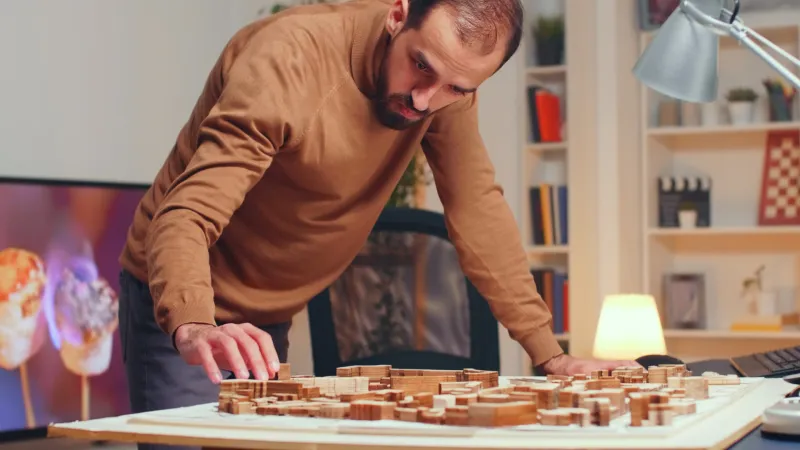
Photo: person designing board game prototype at home workshop table with components, via gamedesigning.org
There's a particular kind of trust that forms when you sit down at a table with someone who designed the game you're playing. They know every edge case. They know which rule everyone always gets wrong. They know the exact moment the table goes quiet because somebody just realized what they've been setting up for three rounds.
Now imagine that person also wrote the code.
That's the wave rolling through indie digital tabletop right now: designers porting their own board games to PC and mobile, not handing them off to a studio, but building the adaptations themselves from home workshops in Ohio garages, Portland apartments, and suburban Atlanta basements. And honestly? The results speak for themselves.
Why the Handoff Model Keeps Fumbling
We've all played the bad adaptation. You know the one — the license got sold, a studio got a six-month contract, and what shipped was a technically functional version of a game that somehow feels like nobody involved ever touched cardboard. The rules are right. The soul is gone.
The problem isn't talent. It's distance. When the person coding the game has never felt the tension of pulling a token from a bag with three players watching, they optimize for what they can see: systems, not stakes.
The designers doing their own ports don't have that problem. They lived with these games for years before a single line of code existed. They know what players argue about, what makes them cheer, and what they silently house-rule because the official version was slightly off.
Three Designers, Three Workshops
Marcus Tran — Columbus, Ohio. Tran's worker-placement game Harvest Line became a small-press hit in 2023, and instead of licensing it, he spent eighteen months teaching himself Unity at his kitchen table. "I could have sold the rights and somebody else's version would've shipped a year sooner," he told us. "But they'd have shipped a year sooner and been fine. I wanted it to be more than fine."
Tran's digital version includes something no outside studio would have thought of: a post-game recap narrated in the same dry humor he uses when teaching the game in person at conventions. Players noticed. Reviews consistently mention that it "feels like him."
Dana Okafor — Portland, Oregon. Okafor's bluffing game Cold Read was famously hard to adapt — half the experience is reading faces. Her solution, built over weekends in a shared makerspace, leans into asynchronous voice clips and timed response windows that recreate the pressure of being watched. "I failed at this twice before I got it right," she says. "The difference is I could afford to fail, because I wasn't burning someone else's budget. I was burning my own Saturdays."
Ray Delgado — Atlanta, Georgia. Delgado's cooperative survival game Long Winter Road nearly broke his group's friendship on multiple occasions, which he considers a feature. His digital port keeps the brutal difficulty but adds a solo mode he'd designed years ago and never published. "The workshop stuff matters," he told us, gesturing at a shelf of prototypes. "I've got forty failed versions of that solo mode in a box right there. An adaptation studio gets one shot. I got forty."
What Players Actually Get
Beyond the warm fuzzies of supporting a maker, these in-house ports deliver concrete advantages:
- Rulebook intuition baked in. The designer knows exactly which rules confuse people and builds tutorials around those friction points, not around a spec sheet.
- The ugly prototypes survive. In-jokes, placeholder art that became beloved, weird balance quirks — things a studio would "fix" — often stay, and players love them for it.
- Patches that respect the table. When balance updates roll out, they come from someone who's watched a hundred groups play it, not from a spreadsheet.
- Direct lines. Bug reports and feedback go to the actual designer, and the community around these games tends to feel more like a game night than a support forum.
There's also a practical angle worth naming: no licensing fees, no publisher cut on the adaptation side, no stakeholder meetings. A one-person operation can price a digital port at ten bucks instead of twenty-five and still eat.
The 10-Pound Rule
Ask any of these designers why they're doing it themselves and you'll hear variations of the same thing. Tran put it best: "A board game box weighs about ten pounds when you ship it. If you've never carried one to a post office yourself, you don't really know what your game weighs."
It's a maker's metric, not a business one. It's the difference between a game that's been lived in and a game that's been processed. And as more tabletop designers pick up engines and start building, that difference is becoming the whole selling point.
The next great digital board game probably won't come from a studio with a tabletop license. It'll come from somebody who rolled the dice ten thousand times before they ever wrote a line of code — and who still carries the box to the post office themselves.