Celery, Garages, and the Death of the Stock Sound: Inside Indie Audio's DIY Rebellion
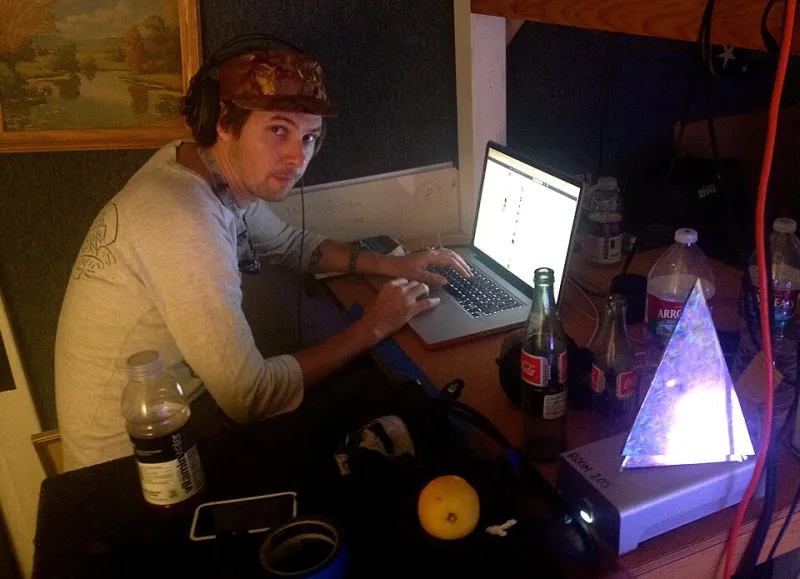
Photo: Incase from San Francisco, USA, CC BY 2.0, via Wikimedia Commons
There's a moment in Hollow Creek — a moody, two-person horror project from a studio of exactly that: two people — where the player walks across a creaky wooden porch at dusk. The boards groan underfoot in a way that feels uncomfortably specific. That's because they are. Developer Mara Ellison recorded them off her own back deck in Portland, mic in one hand, phone flashlight in the other, at eleven at night while her neighbor's dog watched judgmentally from the fence line.
"I could've bought a porch creak pack for thirty bucks," she laughs. "But it wouldn't have been this porch. And somehow, players can tell."
Ellison isn't alone. Across the indie scene, a quiet rebellion against stock sound libraries is underway — one snapped celery stalk and recorded garage sale at a time.
Why Everyone's Game Sounds the Same
Here's the dirty secret of game audio: most stock libraries get mined heavily. If you've played a dozen indie titles in the last five years, you've heard the same gravel footsteps, the same generic tavern murmur, the same whoosh when a menu opens. It's the audio equivalent of everyone using the same free font.
For small teams, the appeal of sound packs is obvious. Licensing a library is fast, cheap, and legal. Recording your own is slow, finicky, and full of surprises — like the time you discover your "quiet" apartment has a refrigerator hum that ruins every take.
But a growing number of developers argue that sameness is exactly the problem, and that audio is the most underrated lever a small studio can pull.
"Players forgive a lot visually," says Devon Park, half of the three-person team behind the farming sim Second Harvest. "But sound goes straight to the feeling part of the brain. If your game sounds like everyone else's, it feels like everyone else's."
The Celery Is Not a Metaphor
The tricks of DIY foley are delightfully low-fi. Snap fresh celery close to a decent mic and you get a grisly bone break. Walk on a bag of cornstarch for snow crunch. Run your fingers over a wet tomato for something squelchy and best not discussed further.
Park's team went further. For Second Harvest, they recorded an entire Saturday at a flea market outside Austin — haggling, laughter, a cash register that hadn't been serviced since the nineties — and layered it into their market scenes. "You can hear a guy selling vintage tools in the background of our spring market," Park says. "A player wrote to us asking what the 'ambient vendor' was saying. He wasn't saying anything. He was haggling over a socket wrench in 2023."
Ellison, meanwhile, built the soundscape of Hollow Creek almost entirely from her own neighborhood: rain on a carport, a screen door, wind through Douglas firs. Total cost? A $150 used field recorder and a lot of patience.
What It Actually Costs
Let's be honest about the tradeoffs, because this isn't a magic solution.
Time. Park estimates recording and processing custom audio took roughly three weeks of work they otherwise would've spent on level design. For a team shipping on a tight runway, that's real money.
Gear. You don't need much — a Zoom H1n or similar recorder runs under $200 — but you do need something, plus free software like Audacity or Reaper to clean things up.
Skill curve. "My first ten recordings were unusable," Ellison admits. "Handling noise, plosives, a lawnmower three blocks away that I swear only exists when I hit record."
And yet, all three developers we spoke with said the same thing: the return on investment shows up in player reviews. Words like "immersive" and "atmospheric" appear in their Steam feedback at a rate they attribute directly to sound. Nobody leaves a review saying "great celery," but the craft registers.
Small Teams, Signature Sound
There's also a branding argument. A big studio can outspend you on graphics, marketing, and middleware. But nobody else has your garage, your porch, your weird neighbor's cash register. Handmade audio is a fingerprint — something a two-person team can own that a hundred-person studio can't copy without also copying your life.
That's the maker ethos at the heart of it. Indie developers have always built games the way woodworkers build furniture: by hand, with whatever's around, because the material matters. Sound is just the latest place that philosophy is showing up.
"Every game I love, I can close my eyes and hear it," Ellison says. "Stardew. Kentucky Route Zero. Hollow Knight. That's not an accident. Somebody cared about every hum and footstep. I figured the least I could do was stand on my porch at midnight with a microphone."
If you're a developer thinking about making the leap, the advice from all three studios is uniform: start small. Record your footsteps on five different surfaces this weekend. Listen back with headphones. You'll hear your game before you ever finish building it — and honestly, that might be the point.