The Sandpaper Test: What Old-School Craftsmen Know That Game Studios Don't
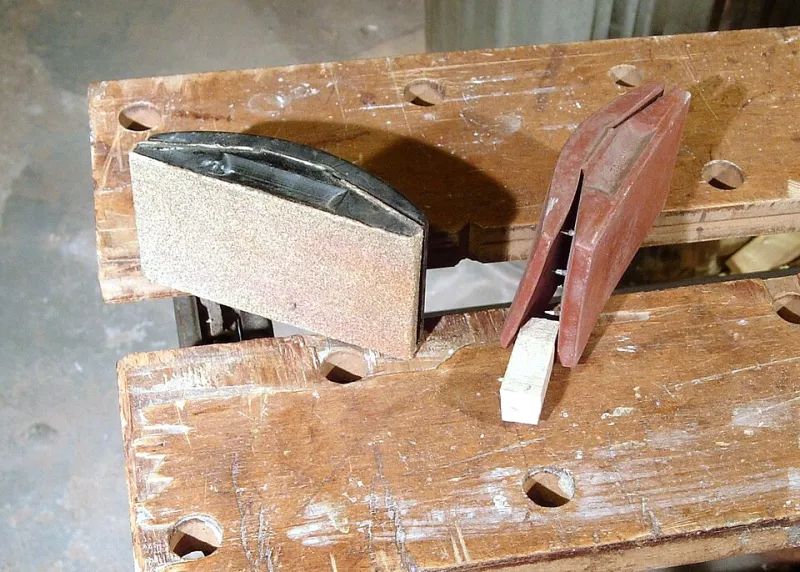
Photo: Just plain Bill, CC BY-SA 3.0, via Wikimedia Commons
There's a moment in every woodworking shop that has no equivalent in a game studio. The craftsman stops, sets the piece down, and runs a hand across the surface — feeling for catches, ridges, anything that shouldn't be there. No spreadsheet. No ticketing system. Just a person, a surface, and an honest question: is this good enough to live in someone's home?
I spent three weeks talking to people who make physical things — furniture, quilts, cabinetry — and people who make games, asking the same question of both groups: how do you know when you're done? The gap between their answers was wider than I expected. And honestly, it says something uncomfortable about how games get made.
The Ritual Problem
Dale Merritt has been building Shaker-style furniture outside Grand Rapids, Michigan for thirty-one years. When I asked how he handles mistakes, he laughed.
"I don't handle them. I prevent them. There's a sequence. You measure, you mark, you check the mark, you cut. Every time. It's boring. That's the point — boring is safe."
Boring is safe. Now hold that up against how most games get finished. The final months of development are famously the opposite of boring: crunch schedules, emergency patches, features cut in a panic the week before gold. We've normalized the idea that a game's last stretch is a fire drill.
Quilters, it turns out, have a word for this exact failure mode. "You never sew your borders on tired," Marian Okafor told me. She runs a quilting circle that meets weekly at a community center in Columbus, Ohio. "Tired sewing is ripped-out sewing. The quilt knows. The seams get sloppy and you pay for it later when the whole thing buckles in the wash."
The quilt knows. The game knows too — we just call it "launch bugs" and shrug.
What Devs Already Suspect
Here's the thing: the developers I spoke with weren't defensive. Most were envious of the workshop model.
"Every woodworker I've ever met finishes things," said a solo dev I'll call J., who asked to remain anonymous because she's currently in production. "I have four unfinished prototypes and a Steam page. The difference isn't discipline. It's that their process has checkpoints built in. Mine has a deadline and a prayer."
J. described her last release: a bug found two days before launch, a weekend of panic fixes, a hotfix patch three days after. "A quilter would have basted it first," she said. "Test the whole seam before you commit. I committed and then discovered the seam was wrong."
Basting — the temporary stitching that holds a quilt together before the final, permanent seams — is maybe the best metaphor I heard all month. It's a way of testing your work in its real configuration without paying the full cost of doing it permanently. Games have equivalents: vertical slices, playable builds, soft launches. But too often studios skip the basting and go straight to the permanent seam, because the schedule said so.
Three Rituals Worth Stealing
So what would it actually look like for a studio to borrow from the workshop? A few practical takeaways, for devs and players alike:
1. The touch pass. Dale runs his hand over every surface before a piece leaves the shop. Studios could adopt something similar: a scheduled, unhurried playthrough of the whole game by someone who wasn't building that section. Not QA testing for bugs — a craftsman's pass for feel. Is this seam smooth? Does the difficulty curve catch anywhere?
2. Baste before you sew. Before locking in any major system — economy, progression, level flow — run it in a rough, temporary state across the whole game. Cheap stitching, easily undone. It's slower up front and dramatically faster later.
3. Never sew tired. Marian's rule deserves a permanent place in studio culture. Crunch isn't just a labor issue; it's a craft issue. Exhausted people make sloppy seams, and sloppy seams buckle in the wash — or in patch 1.2.
A Buyer's Guide, of Sorts
For players, this reframes how to evaluate a game's craftsmanship. You can't run your hand across a save file. But you can look for the telltale signs of a studio that did its touch pass: consistent UI across every screen, a difficulty curve with no sudden walls, menus that load the same speed on day one as day one hundred.
And honestly, the indie scene is where this ethos lives right now. The solo devs and small teams we cover in this space — the ones hand-numbering their physical editions, the ones shipping small and polished — they're already working this way, whether they'd use the word or not. Small teams can't afford to sew tired. They baste. They measure twice.
The big studios could learn from them. Or from Dale, who put it more plainly than anyone I interviewed:
"Nobody ever thanked me for rushing a table."
Nobody ever thanked a studio for rushing a game, either. The patch notes remember. The players remember. The quilt, as Marian would say, knows.