Hand-Soldered and Numbered: Why Indie Devs Are Selling Games Like Pottery
Photo: Fuad Kamal from USA Cropped by czar, CC BY-SA 2.0, via Wikimedia Commons
There's a table in the back corner of a community market in Asheville, North Carolina, that looks like it belongs at a pottery festival. A green felt runner. A hand-lettered sign. And stacked neatly on top: forty copies of a puzzle game called Mothlight, each one a translucent cartridge with a paper sleeve, each one stamped with a number out of forty.
The person behind the table is Becca Lin, a solo developer who spent six years making the game and one very long weekend assembling the physical copies. "I burned the last of these at 2 a.m. and my kitchen smelled like hot plastic for two days," she laughs. "Worth it. Completely worth it."
Lin isn't an outlier anymore. She's part of a quietly growing movement — developers across the US treating games less like software and more like handmade goods, sold directly to players at craft faires, maker markets, and small conventions.
The Folding Table Economy
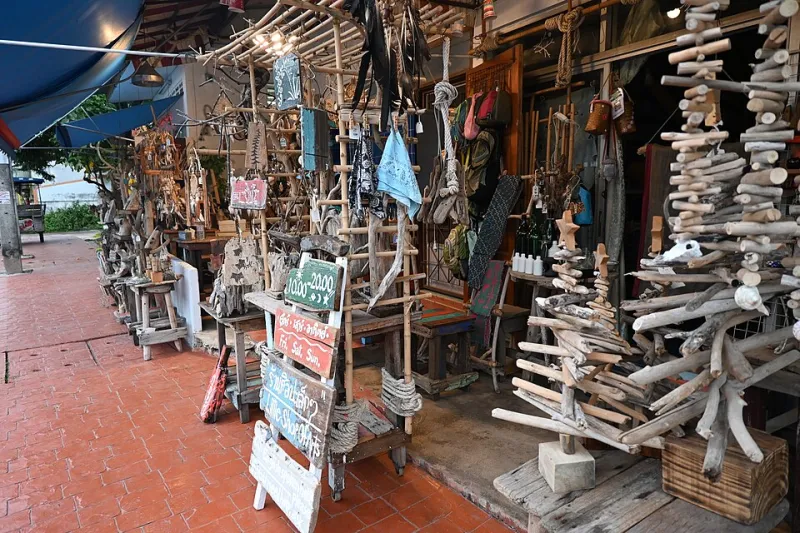
Walk the aisles of events like the Seattle Indie Market, Detroit's Made in Michigan game fair, or the long-running tables at MAGWest and you'll spot the pattern: small runs, physical media, and price tags that read more like gallery pieces than game store clearance bins.
Some devs sell flash drives disguised as cassette tapes. Others burn actual CDs with printed liner notes. A few, like Lin, produce real cartridges for retro-compatible hardware. What they share is a philosophy: a game can be an object you own, hold, and gift — not just a license in a launcher.
"I wanted my mom to be able to buy my game," says Marcus Oyelaran, whose pixel-art farming sim Second Harvest sold out its run of sixty handmade USB editions at a Columbus maker faire. "She doesn't know what a Steam key is. She knows what a box with a ribbon on it is."
Numbered, Signed, and Gone
The craft angle isn't just aesthetic — it's structural. Limited runs create scarcity in an industry drowning in infinite supply. When a game exists as thirty numbered units, each sale feels like an event rather than a transaction.
It also inverts the usual economics. There's no 30% platform cut on a sale made across a folding table. There's no discoverability algorithm to appease. There's just a person, a product, and a conversation — the same exchange that's sustained American craft fairs for decades.
And the conversations matter. Devs at these markets describe them as the best market research money can't buy. You watch which items people pick up. You hear which mechanic confused three different buyers. You watch a twelve-year-old drag their parent back to your table, and you remember why you started making games.
Is This Nostalgia or Strategy?
Skeptics have a fair question: in 2026, is physical indie media a real movement or a charming niche? Digital distribution is cheaper, greener, and infinitely scalable. Nobody's arguing a hand-stamped cartridge is the future of the medium.
But the devs making these objects aren't trying to replace digital. They're building a premium layer on top of it — the same way vinyl survived streaming not by competing on convenience but by offering something streaming can't: permanence, ritual, and a thing to put on a shelf.
There's also a 'buy local' logic at work. At these faires, you're not buying a game; you're buying this game, from this person, who lives two towns over. That's a value proposition no storefront can replicate, and it's one American consumers have already proven they'll pay for at every farmers market and craft fair in the country.
The Takeaway
Not every indie dev should start burning discs. But there's something instructive in the movement — a reminder that games are made by people, and that people selling directly to people is a business model as old as commerce itself.
Lin puts it simply: "Someone bought number seven today. She said she's going to give it to her sister for her birthday. You can't put a price on that. Well — I did. It was forty dollars. But you know what I mean."
If a maker faire rolls through your town, go. Bring cash. Buy something numbered. Some of these games will be collector's items someday. All of them were made by hand.